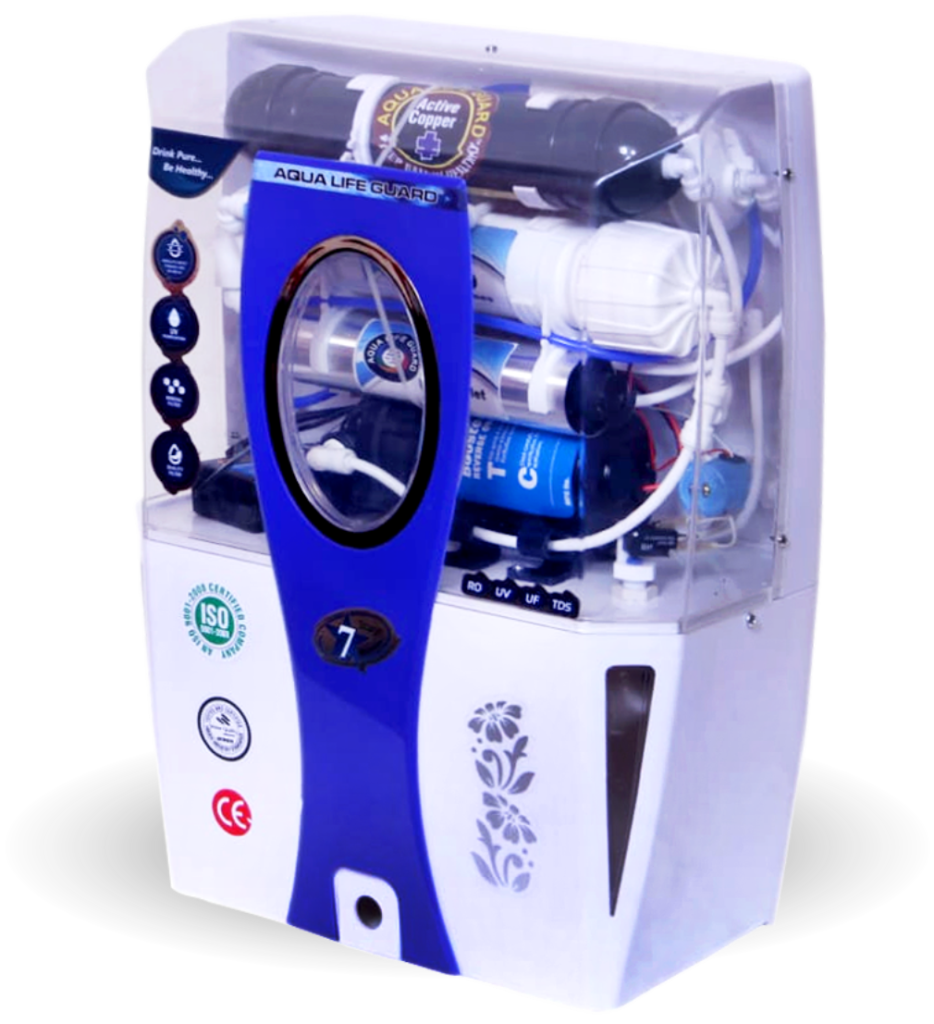
RO Water Purifier Leaking From the Bottom: Causes and Fixes
Water beneath your RO may come from a leaking connection, filter housing, storage tank or overflowing drip tray. Start by safely isolating the purifier—not opening its cabinet.
RO Repair & Problems · 27 October 2026 · 4 min read
First, stop the water and isolate power safely
An RO water purifier leaking from the bottom does not necessarily have a damaged base. Water can run down from a tube connection, filter housing or storage tank and collect underneath. The right fix depends on where the leak starts, not where the puddle appears.
Stop dispensing water. Close the purifier’s clearly identified inlet valve if it is safely accessible. Switch off power only from a dry, safely accessible switch. If the plug, socket or surrounding area is wet, do not touch it; have power isolated safely by a qualified person. Keep others away from the wet area.
Do not tilt, move or open a leaking purifier to search underneath.
Do not loosen filter bowls or tubes: pressure can remain after power and inlet water are turned off.
Avoid restarting repeatedly to reproduce the leak.
Likely causes—and the repair each one needs
Several faults can produce the same bottom-leak symptom. These clues narrow the possibilities but cannot confirm a diagnosis remotely.
Overflowing drip tray or leaking dispensing tap: water may travel beneath the cabinet. Empty a user-removable tray as the manual permits; a tap that continues dripping needs inspection.
Loose or damaged tubing connection: leakage may appear after servicing or movement. A technician should check the tube end, connector and retaining parts rather than simply pushing everything tighter.
Filter-housing seal fault: a displaced, worn or incorrect O-ring can leak. Safe repair requires isolation, depressurisation and the correct seal; overtightening can damage the housing.
Cracked housing or storage tank: visible seepage or a split usually requires replacement with a model-compatible part, not glue or tape.
Overflow, pressure or shutoff fault: leaks associated with filling can involve level controls, valves or unsuitable inlet pressure. Diagnosis depends on the purifier’s design; safety valves must never be bypassed.
Safe checks at home, plus useful problem photos
Once power is safely isolated, dry only the accessible surrounding surface. Without removing the cabinet, look for external wet patches, a full drip tray, visible tubing damage or water arriving from nearby sink plumbing. Check whether an externally visible reject-water tube appears kinked or displaced; do not disconnect it or block its outlet.
Record when you first noticed the leak: during filling, while dispensing, after servicing or while idle. Residual dripping after shutdown can come from retained water, so it does not identify the faulty part.
Take a wide photo showing the purifier and puddle, then close-ups of accessible wet areas and the model label. Do not reach behind wet electrical connections for a better picture. Share these photos privately for initial assessment; a photo cannot reveal every internal fault.
Consult your model manual before removing even a drip tray.
Do not adjust pressure controls, open housings or apply sealant as a trial repair.
When a technician or water test is needed
Arrange inspection for recurring puddles, water emerging from inside the cabinet, cracks, continuous overflow or a leak that persists after inlet isolation. Electrical wetness, burning smells or tripping require leaving the unit out of use and qualified electrical assessment.
A technician should trace the source, check compatible seals and fittings, and verify leak-free operation after repair. Maintenance should follow the model manual and actual component condition—not an assumed replacement interval.
Leak repair does not establish drinking-water safety. If dirty water may have entered the storage area, or contamination is suspected, avoid drinking that water pending assessment. Appropriate laboratory testing addresses contamination; a TDS reading alone cannot establish safety.
Contact Aqua Life Guard in Kanpur
Aqua Life Guard is an independent multi-brand service provider, not an authorised brand service centre or a brand customer-care number. Share your model, leak timing and problem photos when requesting help.
Address: 302 Barra-II Main Rd Sector 4 Barra 2, Kanpur. Open 24 hours. Email: umeshdwivedi57@gmail.com.
<a href="tel:+919935043078" role="button">Call 099350 43078</a> <a href="https://wa.me/919935043078" role="button">WhatsApp problem photos</a>
<a href="https://aqualifeguard.com/ro-repair-in-kanpur">View RO Repair in Kanpur</a>
FAQ
Questions from Kanpur customers
Need RO Service in Kanpur?
Tell us what's wrong with your RO purifier and we'll help you find the right service.