Kanpur Water TDS Level Guide: What Is Safe and Which RO Suits Your Supply

What TDS actually means, the ranges commonly used as a reference in India, and how Kanpur's municipal vs borewell supply changes the purifier you should buy.

Water Quality · 12 August 2026 · 7 min read

Kanpur Water TDS Level: Kitna Safe Hai Aur RO Kaise Chunein - Aqua Life Guard Kanpur

What TDS means for drinking water

TDS stands for Total Dissolved Solids - the total amount of minerals, salts and metals dissolved in your water, measured in parts per million (ppm). It is not a direct measure of safety: TDS does not tell you about bacteria, and very low TDS is not automatically better. It is, however, a quick and useful signal of what kind of purification your supply needs.

The Bureau of Indian Standards (IS 10500) sets an acceptable limit of 500 ppm for drinking water, with a permissible limit of 2000 ppm when no alternative source is available. Most households find water between roughly 50 and 300 ppm pleasant to drink.

  • Below 50 ppm - very low mineral content, water can taste flat
  • 50-300 ppm - generally comfortable for drinking
  • 300-500 ppm - acceptable, taste may be noticeably harder
  • Above 500 ppm - RO purification is usually recommended
  • Above 1000 ppm - RO with correct membrane selection is essential

Why TDS varies so much across Kanpur

Kanpur homes are supplied in different ways, and the readings differ accordingly. Areas on Jal Nigam municipal supply, largely drawn from Ganga-based treatment, often show moderate TDS. Colonies that rely on submersible borewells - common in parts of Barra, Naubasta, Panki, Bhauti and newer outer developments - tend to read higher, and hardness with it.

Tanker-fed supply during shortages adds another variable: the same tap can give very different readings in different weeks. This is why we test the actual input water at your address before recommending a purifier, instead of quoting a number from a brochure.

How to check TDS at home

A handheld TDS meter costs a few hundred rupees and takes seconds to use. Fill a clean glass from the tap, dip the probe to the marked line, wait for the reading to settle, then repeat on the purified outlet. Comparing the two numbers tells you how much work your RO is actually doing.

  • Test input (tap) and output (purified) water separately
  • Note the readings with a date so you can spot a trend
  • A rising output reading over weeks often points to the membrane
  • Sudden changes in taste or smell deserve a check even if TDS looks normal

Choosing the right purifier for your reading

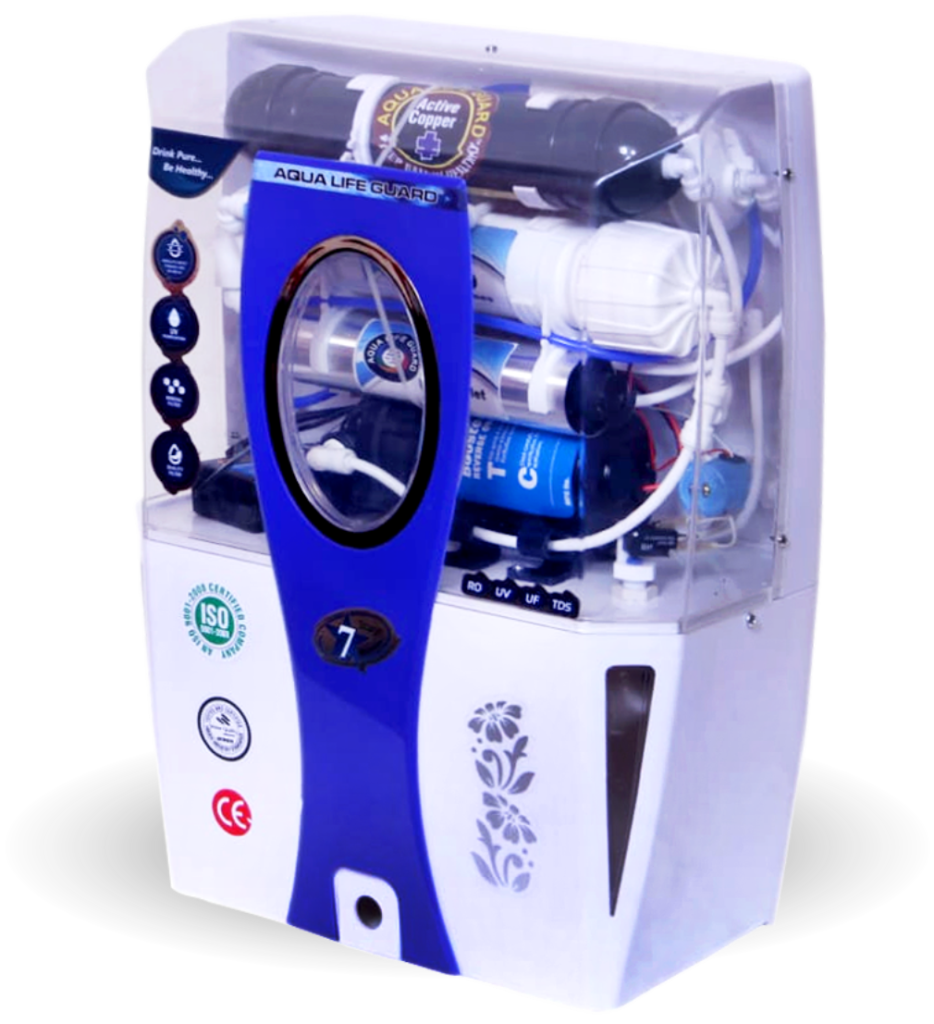
For municipal supply in the moderate range, an RO + UV unit is normally sufficient. Where supply alternates between municipal and tanker water, an RO + UV + UF configuration handles the variation better. For borewell and high-TDS input, membrane selection matters more than the number of stages, and a TDS controller helps keep the taste balanced instead of stripping the water completely.

If you want a second opinion on your reading before buying, our technician can test your supply during a visit and explain which configuration fits it.

FAQ

Questions from Kanpur customers

Need RO Service in Kanpur?

Tell us what's wrong with your RO purifier and we'll help you find the right service.